 Forge
by Stellitron
Forge
by Stellitron
Test REST APIs, MCP servers and AI agents from one desktop app.
Forge saves each request as a JSON file in your repository, so your API tests are reviewed and versioned with the code they test. Tokens stay in a local file that never reaches git. Free and open source under Apache 2.0.
What's included
Everything below works without an AI model or an account.
- Requests
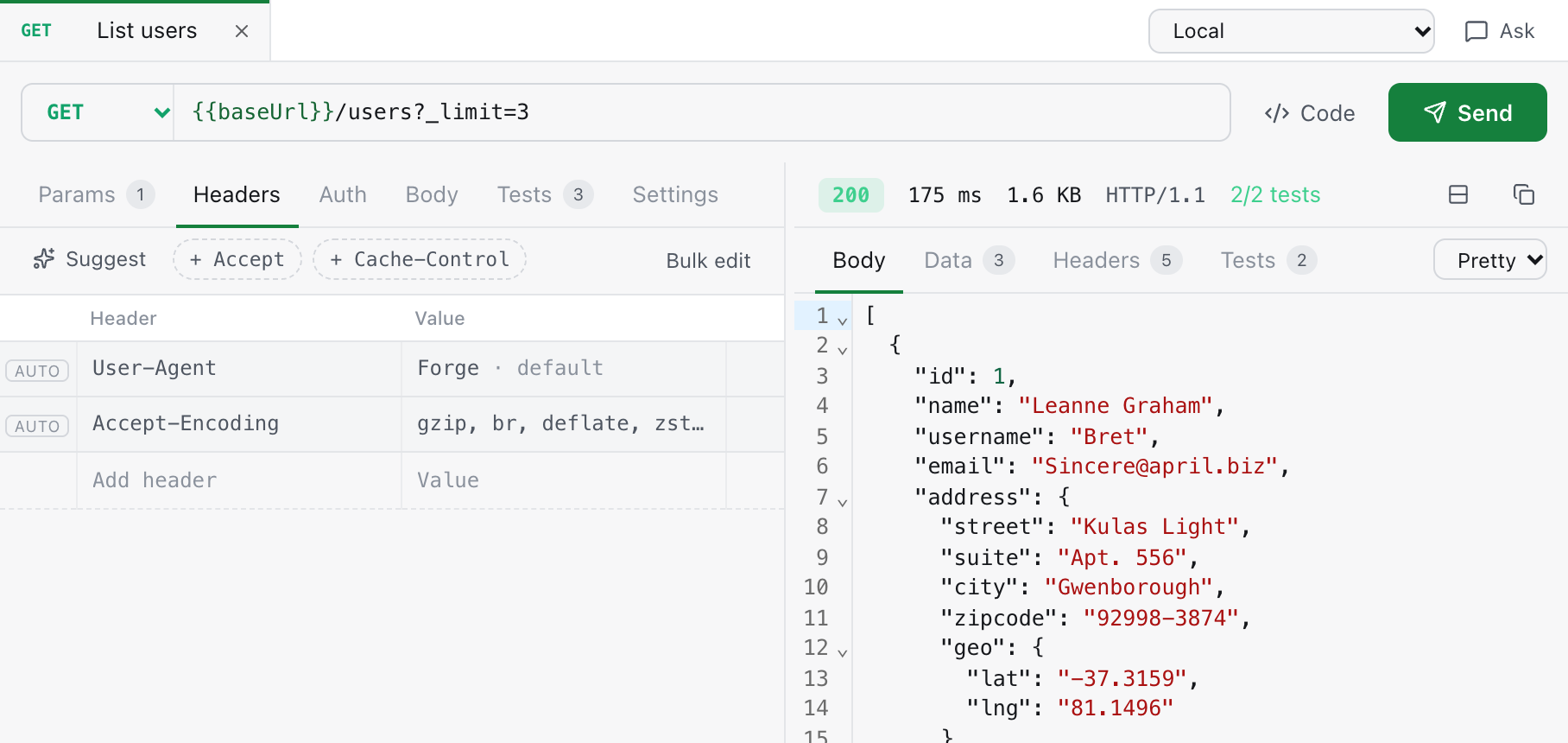
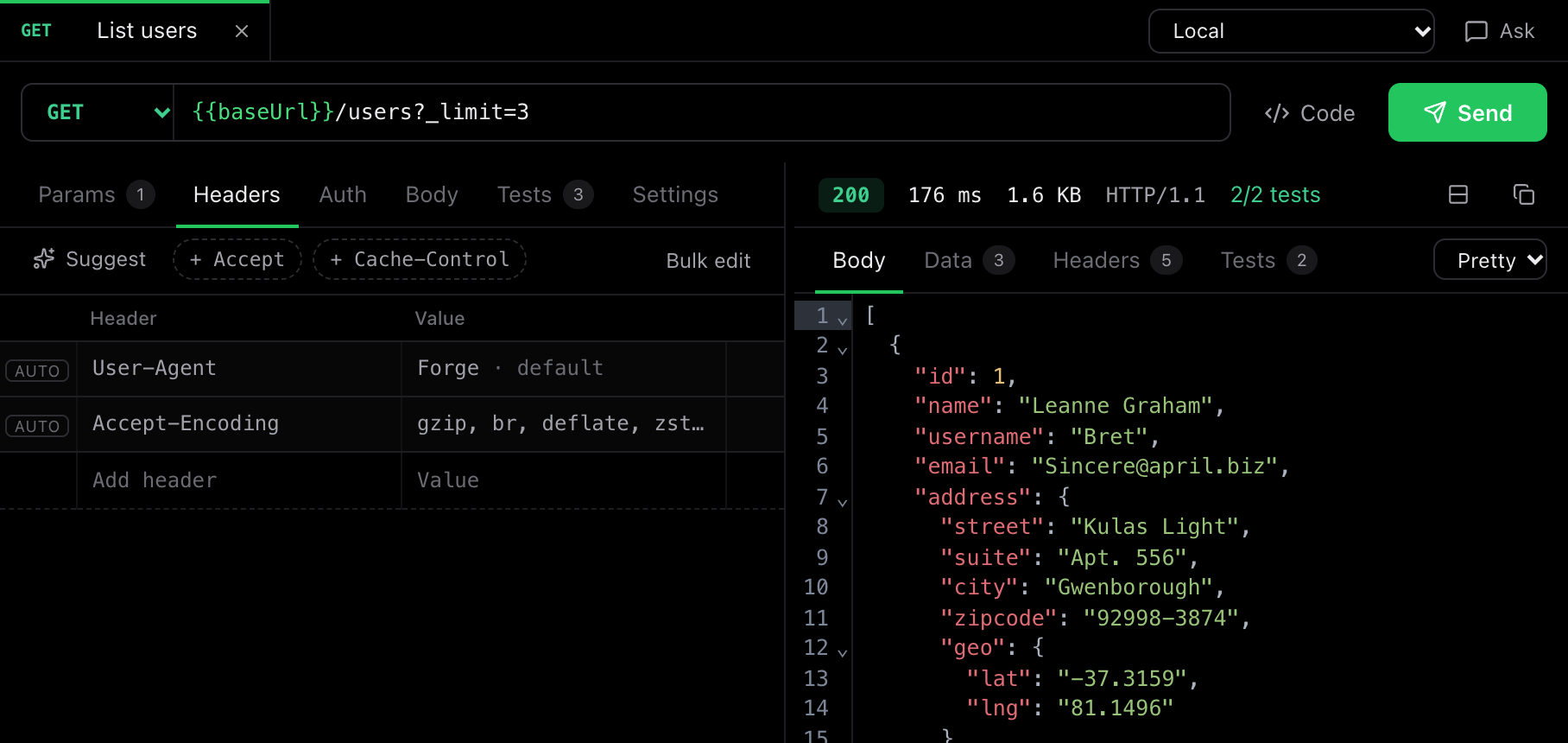
- REST and GraphQL with params synced to the URL,
:idpath variables, Bearer, Basic and API key auth, JSON, XML, form, multipart and file bodies. Paste acurlcommand to import it. - Environments
{{baseUrl}}style variables for local, staging and production. Unknown variables are underlined before you send.- Tests
- Assertions on status, headers, JSONPath, body, time and size. Generate them from a response, capture tokens into variables, run a folder as a suite.
- Data and reports
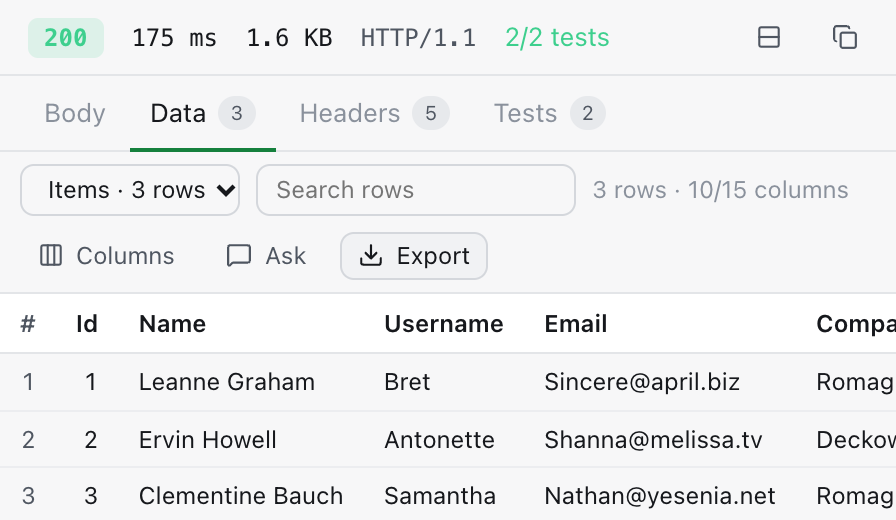
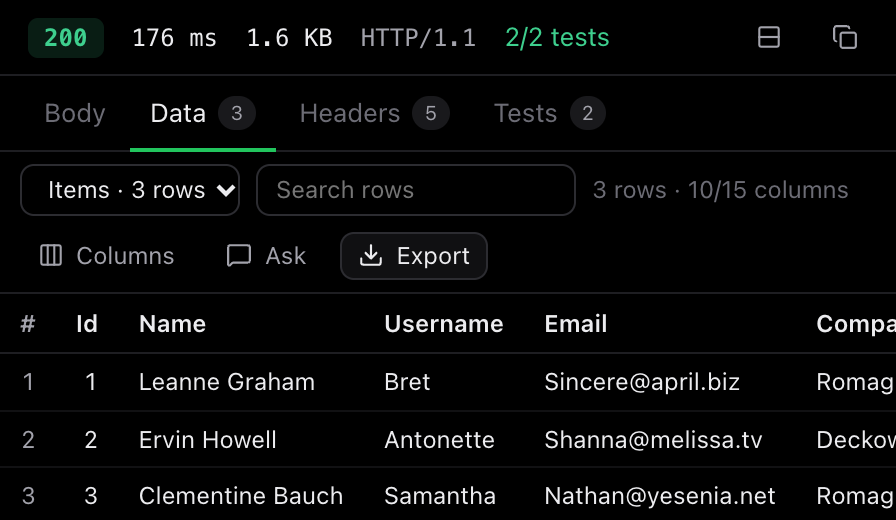
- JSON becomes a sortable table. Export to Excel, PDF, Word, PowerPoint, CSV or Markdown, computed from the data itself.
- Other protocols
- WebSocket with custom headers, A2A agents with streaming tasks, and website checks for headers, caching, security and broken links.
- Import
- Postman, Insomnia, Bruno, OpenAPI, Swagger, HAR and cURL. The format is detected automatically.
- Code
- Turn any request into cURL, fetch, axios, Python, Go, Java, C#, PHP, Ruby, Rust, HTTPie or PowerShell.
MCP servers and agents, in the same client as your APIs
Most API clients stop at HTTP. Forge also speaks MCP and A2A, the protocols AI tools use to call your services.
Test an MCP server over stdio, Streamable HTTP or SSE. List its tools, call them with your own arguments, and see every JSON-RPC message in the console.
Let your AI assistant use Forge. Turn on the local server in Settings and Claude, Copilot or Cursor can list, run and save the requests in your workspace. Calls that change data wait for your approval.
Bring your own model, if you want one. Claude, OpenAI, Gemini, Azure, Bedrock, OpenRouter or a local Ollama model can answer questions about a response or run an agentic test. Models see {{token}}, never its value.
$ claude mcp add --transport http forge \
    http://127.0.0.1:7878/mcp \
    --header "Authorization: Bearer <token>"
list_requests    browse saved requests
run_request      send one and run its tests
run_folder       run a folder as a suite
http_request     send a one-off request
query_data       filter and group a response
create_report    write an Excel or PDF report
save_request     add a request to the workspace
Your requests are files in your repository
Pick any folder, such as one inside your project. Commit the requests, review changes in pull requests, and your team gets them on the next pull.
- No account. There is nothing to sign up for. Forge runs entirely on your computer.
- No telemetry. The only request Forge makes on its own is the update check, which you can turn off.
- Secrets split on import. Tokens and passwords found in imported Postman or Insomnia environments go to the local file.
- Approval before AI sends a secret. A request built by an AI that would send a token to a new host waits for you. This check can't be disabled.
- Signed updates. Each update is signed by Stellitron and verified before it installs.
- Company networks. Forge uses the system proxy and certificate store, so it works on VPNs without setup.
Download
Installed copies update themselves after you approve each update.
Forge is built by Stellitron in Bengaluru and developed in the open. Report bugs or send pull requests on GitHub.
$ git clone https://github.com/stellitron/forge
$ cd forge && npm install
$ npm run app